What Is a Birth Chart Reading? A Jungian Guide to Chart Interpretation
Discover your cosmic blueprint
Cast your natal chart and explore the symbolic patterns that shape your personality and life journey.
Get Your Free Natal ChartFree · No sign-up needed
A birth chart reading is a structured interpretation of the sky at your exact moment of birth, used not to predict events but to map the psyche. In Jungian terms, it reveals the archetypal forces shaping your personality, relationships, and unconscious patterns, serving as a symbolic companion on the path toward individuation.
(52 words)
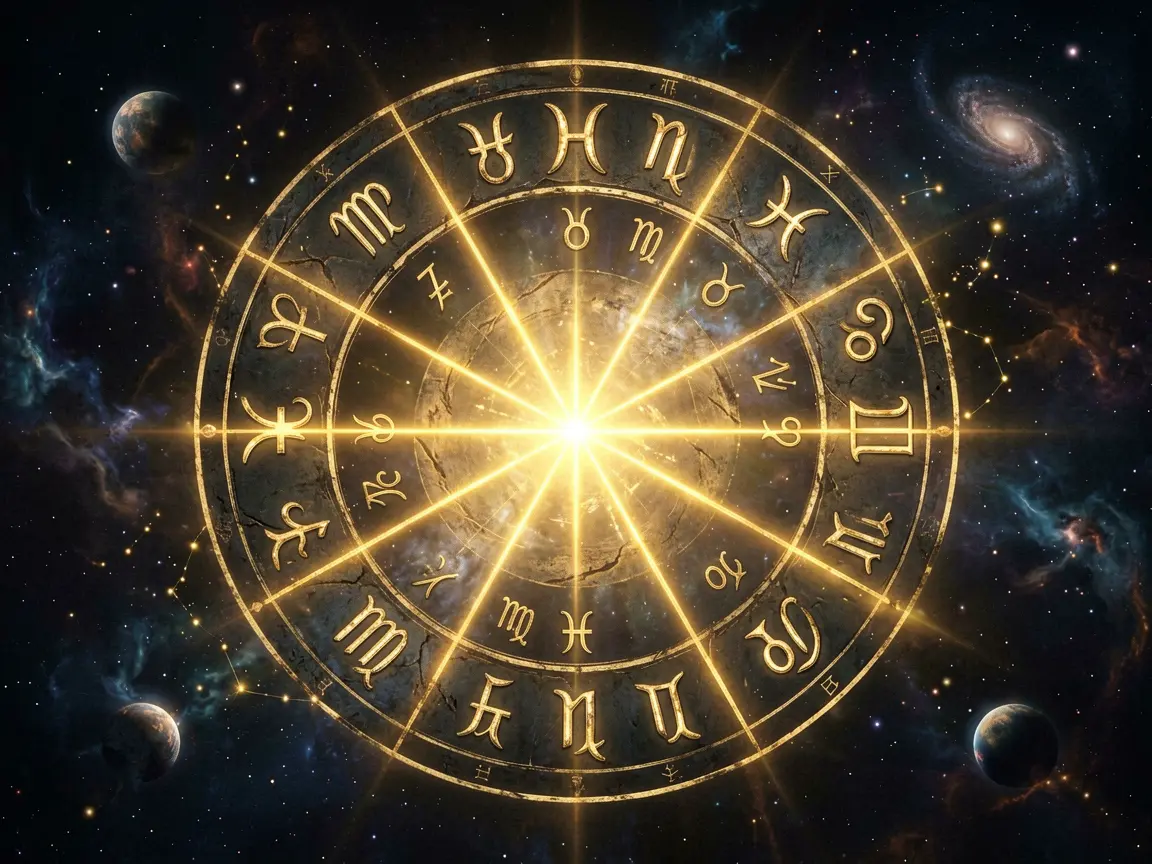
You sit down for a birth chart reading. Someone asks for your date, time, and place of birth. They pull up a circular diagram filled with strange symbols. Glyphs for planets, triangles for houses, lines crisscrossing in patterns you don't yet recognize. A few minutes later they start talking about you. Not like "you're a Scorpio, so you're intense." Deeper than that. Things you haven't told anyone. Patterns you sensed but never named.
That is the moment a birth chart reading stops being astrology-as-entertainment. It becomes a mirror. Not a prediction.
A birth chart reading, when done honestly, is a structured conversation with the symbolic architecture of your psyche. The planets, signs, houses, and aspects form a symbolic language. Not fortune-telling machinery. One that maps the archetypal forces shaping your personality, your unconscious patterns, your relational style, and your path toward what Jung called individuation.
This is what a birth chart reading does, how it works psychologically, and what you can expect when you sit down for one.
The Birth Chart as a Map of the Psyche
Your birth chart is a sky snapshot from the exact moment you took your first breath. Astrologers call it a natal chart, from the Latin natus, meaning born. The astronomical data only matters because of what it symbolizes.
Jung did not invent the idea that celestial patterns reflect psychological ones. He rediscovered it. His work on synchronicity gave astrology a psychological framework the West had lacked since the Enlightenment. When a planet occupies a particular sign at your moment of birth, that alignment reflects something. An acausal parallel to the configuration of your psyche at the start of your conscious journey.
A birth chart reading reveals the raw material you have to work with. Strengths you can develop without effort. Wounds that will demand your attention. Gifts that come naturally. Blind spots your ego was built to avoid.
In Jungian terms, the birth chart maps your personal myth. The archetypal story your life is living out, whether you are conscious of it or not.
The Archetypal Cast: Planets as Psychological Forces
Every planet in your chart corresponds to an archetypal energy. A good reading walks you through each one. Not as a checklist of traits. As a living cast of inner characters.
The Sun is the ego. The organizing principle of your conscious identity. The self you are learning to become, not the self you already are.
The Moon is the unconscious. Your emotional instinct, your shadow patterns, the parts that react before your ego can intervene. In a reading, the Moon reveals the wounds your Sun sign's persona was built to protect.
Mercury shapes how you think and communicate. Venus shows how you love and what you value. Mars reveals where your aggression lives and how you assert yourself. Each planet is a distinct psychological function. It has its own agenda, its own history, its own evolution.
Jupiter expands. Saturn contracts. Uranus disrupts. Neptune dissolves. Pluto transforms.
A birth chart reading helps you see these forces in motion. The actual dynamics driving your relationships, career patterns, recurring struggles, and moments of unexpected grace. The goal is to recognize which archetypes are active in your life right now and which ones you have been ignoring.
Houses and Signs: Where and How the Drama Unfolds
If the planets are the actors, the signs are the costumes and the houses are the stages.
Your Sun in Aries expresses itself differently from your Sun in Pisces. The core function -- ego, identity, will -- is the same. The sign modifies how the energy manifests. Direct or subtle. Fiery or watery. Practical or visionary. A reading pays close attention to these modifications because they explain why two people with the same planet can feel so different.
The twelve houses divide the chart into life domains. Self, money, communication, home, creativity, work, relationships, transformation, philosophy, career, community, and the unconscious. Planets in the first house shape your outward personality. Planets in the seventh house shape your relationships. Planets in the twelfth house shape what remains hidden.
Reading a birth chart means synthesizing. No single placement tells the whole story. A Moon in the tenth house suggests emotional investment in career. What matters more is whether that Moon squares Saturn, trines Venus, or opposes Pluto. Career as a burden. Career as love. Career as a power struggle you cannot escape. A good reading holds all these tensions at once.
Aspects: The Relationships Between the Forces
Planetary aspects are where a reading comes alive. An aspect is an angular relationship measured in degrees. A conjunction merges two energies. A square creates friction. A trine flows easily. An opposition polarizes. A sextile offers opportunity. Each one tells a different story about how the planetary archetypes interact inside you.
A Sun square Moon suggests a fundamental tension between your conscious identity and your emotional instincts. The persona you project is at war with how you actually feel. This tension is the engine of psychological development. The goal is to integrate it. Hold both sides without splitting, without disowning one for the other.
A T-square describes a triangular pressure system. Two planets in opposition, both squaring a third. Three parts of your psyche pulling against each other, creating an urgent need for release. A grand trine describes a natural gift that may never develop because it comes too easily. No friction, no growth.
A reading that ignores aspects is a novel that describes each character without ever showing them interact. The aspects are the plot. They reveal which parts of you are in dialogue, which are in conflict, and which have been silent so long they forgot how to speak.
Timing Cycles: When the Archetypes Activate
Your birth chart is static. The planets keep moving. When a transiting planet forms an aspect to a planet in your natal chart, it activates that archetype. A transit is an invitation, not fate.
Saturn returns to your natal Saturn every twenty-nine years. These periods feel heavy because they are heavy. Developmental deadlines, karmic accounting, the psyche demanding you grow up. Jupiter transits feel expansive. Opportunities for growth that require you to say yes before you feel ready.
A reading that includes timing examines where current transits fall in your chart. Which houses are being activated. Which natal planets are being aspected. It tells you what psychological weather is arriving, so you can meet it prepared instead of blindsided.
What a Birth Chart Reading Is Not
It is not a prediction. No ethical astrologer will tell you "you will marry at 27" or "you will get a promotion in March." Those claims belong to fortune-telling. A birth chart reading can describe timing cycles. Saturn returns, Jupiter transits, progressed moons. But it frames them as psychological seasons, not fixed outcomes. Saturn around age 29 does not guarantee a crisis. It guarantees a developmental milestone. How you meet it depends on how conscious you are.
It is not a diagnosis. Astrology can support therapeutic work, but a birth chart reading is not therapy. A challenging aspect does not mean something is wrong with you. Difficulty is not damage.
It is not a substitute for your own authority. The chart is a mirror. The most valuable reading leaves you with more questions than answers. Questions that send you back into your own life with a sharper awareness of the patterns you are living.
Bringing the Reading Home
After a reading, the work is yours. The astrologer can name the archetypes, describe the tensions, and illuminate the timing cycles. Integration happens in the quiet moments. When you catch yourself reacting from an unexamined Moon placement. When you recognize Saturn's hand in a delay that turns out to be necessary. When you feel the pull of a Jupiter transit toward something larger than your current self.
Frequently Asked Questions
What is a birth chart reading? A birth chart reading is a psychological consultation that uses your natal chart as a symbolic map of your psyche's archetypal structure.
How is a birth chart reading different from a horoscope? A horoscope describes astrological weather for a group. A birth chart reading is specific to one person's exact time and place of birth, addressing the unique configuration of planetary energies shaped by your particular circumstances.
Can a birth chart reading predict the future? No. Ethical astrology reveals psychological patterns and timing cycles, not fixed outcomes. The chart shows what is constellated, not what is determined. Conscious choice always has the final word.
What should I bring to a birth chart reading? Your exact birth time. Even a four-minute difference shifts the rising sign and house system. If you do not know your birth time, bring what you have. Some astrologers can work with noon charts or use rectification techniques.
How often should I get a birth chart reading? Your natal chart does not change. A single thorough reading can take years to integrate. Many people return every two to five years, or during significant transits like their Saturn return, to understand the current archetypal weather.
Discover your cosmic blueprint
Cast your natal chart and explore the symbolic patterns that shape your personality and life journey.
Get Your Free Natal ChartFree · No sign-up needed
Recommended Reading
Astrology
Weekly Zodiac & Horoscope Forecast October 26 - November 1, 2026: A Taurus Full Moon Ruled by a Backward Venus
Astrology
Weekly Zodiac & Horoscope Forecast October 19 - 25, 2026: Mercury Retrograde Begins as Venus Meets the Sun
Astrology
Weekly Zodiac & Horoscope Forecast October 12 - 18, 2026: Pluto Turns Direct
Astrology
Weekly Zodiac & Horoscope Forecast October 5 - 11, 2026: The Libra New Moon