Astrology Compatibility: The Archetypal Chemistry of Two Souls — A Jungian Guide to Synastry
Discover your cosmic blueprint
Cast your natal chart and explore the symbolic patterns that shape your personality and life journey.
Get Your Free Natal ChartFree · No sign-up needed
Astrology compatibility, known as synastry, is the comparison of two birth charts to reveal how each person's planets activate the other's psyche. Rather than ranking perfect matches, synastry maps archetypal chemistry: where harmony flows naturally, where friction demands growth, and where unconscious projections seek transformation through relationship.
You meet someone new. The conversation flows, or maybe it grates from the first exchange. Something in you recognizes them. Or something recoils. Western culture calls this chemistry, vibes, destiny. Analytical psychology calls it the meeting of two unconscious systems, each projecting its unlived contents onto the other.
Carl Jung wrote about this in his work on projection and the anima/animus. "The meeting of two personalities is like the contact of two chemical substances," he said. "If there is any reaction, both are transformed." That quote holds the deeper truth about astrology compatibility. It is a symbolic language for what happens when two psyches interact.
Pop astrology reduces compatibility to a sun sign checklist. "Are you a Libra? Date a Gemini." But real synastry, the branch of astrology that compares two birth charts, operates closer to how Jung saw the psyche: a living system of archetypal forces that activate, collide, and transform each other in relationship.
The Archetypal Chemistry Behind Synastry
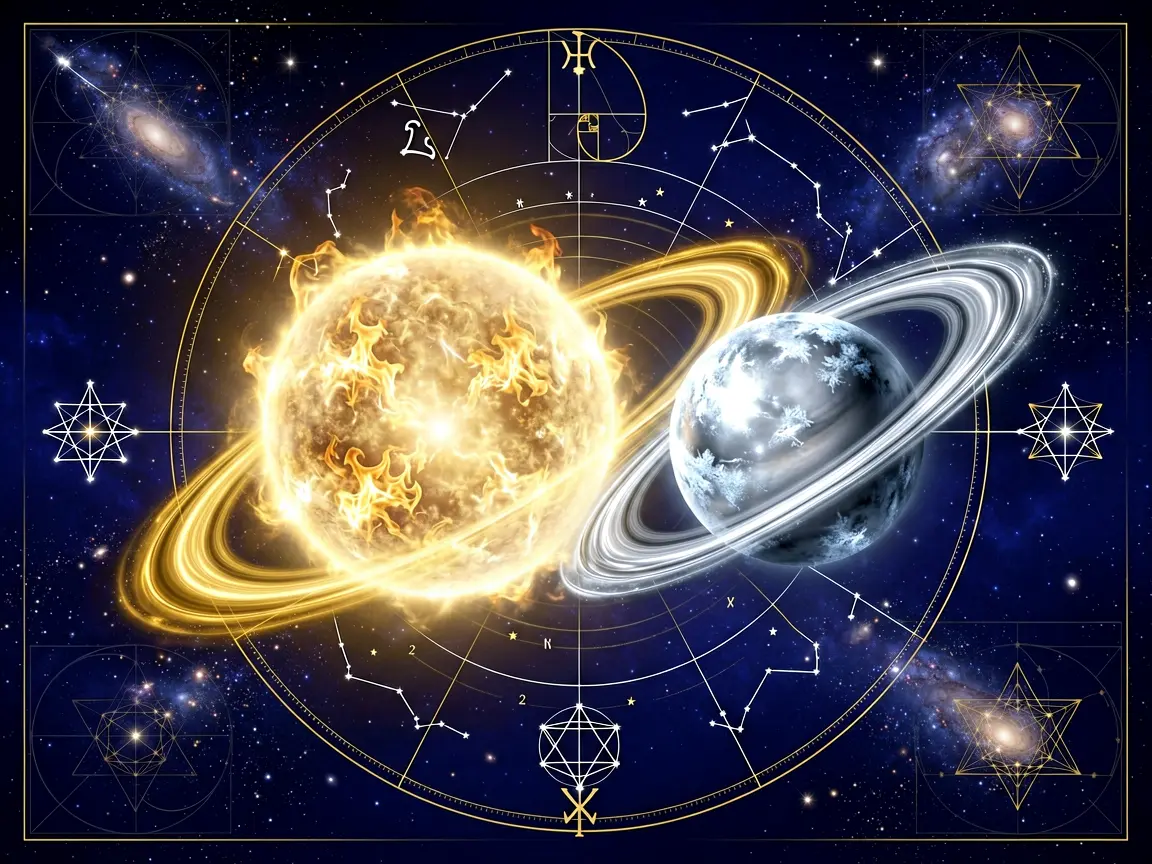
Synastry overlays two birth charts to see how the planets of one person interact with the planets of another. Think of it less as a compatibility score and more as a map of the unconscious territory you will navigate together. Every relationship activates specific archetypes. Those activations show up clearly in the astrological comparison.
When someone's Venus falls into your seventh house, the Anima archetype stirs. You see in them the image of perfect love. For a time, you might be right. This is the projection mechanism Jung described: we fall in love with the archetype first, and only gradually does the actual person emerge from behind the projection. Synastry shows you which archetypes are being projected and where the work of withdrawing those projections will demand the most from you.
The Sun-Moon dynamic between two charts is especially revealing. If your Sun trines their Moon, there is an instinctive harmony between your core identity and their emotional nature. The psyche relaxes. But if your Sun squares their Moon, you will trigger each other in ways that feel personal. They are not. The friction comes from two fundamentally different ways of experiencing life meeting without a bridge. Jung would call this a confrontation with the shadow, played out through relationship.
The Planets as Archetypal Actors in Relationship
Each planet in a synastry comparison represents a different layer of the psyche that comes alive in relationship:
Sun contacts reveal how your core self is seen and validated by the other. Strong Sun connections feel like recognition, the sense that someone truly sees who you are. Challenging Sun aspects bring out the ego's defenses. What looks like a power struggle is often a call to individuation.
Moon contacts show the emotional bonding pattern. When someone's Moon lands in your fourth house or aspects your natal Moon, they touch your preverbal emotional core. I mean the place in you that learned about love before you had language for it. These contacts create deep attachment. When they are difficult, they resurrect childhood wounds with surprising precision.
Venus contacts map the Anima/Animus projection field. Venus is the archetype of attraction, value, and aesthetic harmony. When another person's Venus activates your chart, they become a carrier for your image of love. The danger here is mistaking the projection for the person. The gift is that Venus aspects show you exactly what your psyche is ready to integrate through relationship.
Mars contacts reveal how you assert yourself and pursue desire in the presence of another. Mars in synastry shows where conflict will arise, but also where passion lives. Jungian psychology sees Mars as the archetype of aggressive differentiation. Without Mars friction, a relationship may lack the heat needed for genuine transformation.
Saturn contacts bring the Shadow of commitment into view. Saturn in synastry feels heavy at first. Restriction, delay, the sense that something is being tested. But Saturn is also the archetype of structure. Where Saturn touches, the relationship can build something durable, if both parties do the psychological work the aspect demands.
Jupiter contacts expand whatever they touch. If Jupiter from one chart aspects a personal planet in another, the relationship becomes a vehicle for growth, adventure, meaning-making. But Jupiter has a shadow too. Inflation, overpromising, avoiding the hard edges. A Jupiter-heavy synastry can feel so good you mistake enthusiasm for depth. Jung would recognize this as the archetype of the Puer or Puella, eternal youth that must eventually meet Saturn to mature.
Neptune contacts activate the mystical dimension of relationship. When Neptune aspects a personal planet in synastry, boundaries blur. You may feel you have known this person in a past life, or that they understand you without words. This is the archetype of fusion. It is both the source of transcendent love and the breeding ground for disillusionment. The work here is to love the actual person, not the fantasy you projected onto them.
Pluto contacts bring the death-rebirth archetype into relationship. Pluto in synastry is never neutral. It will transform you, often through crisis. These relationships have an intensity that can feel overwhelming. Jealousy, power struggles, a sense that you cannot walk away even when you should. Plutonic synastry is shadow-work par excellence. If you stay conscious through it, you emerge fundamentally changed.
Houses in Synastry: Where the Chemistry Plays Out
Beyond planetary contacts, the houses involved in synastry tell you where the relationship will do its work. When someone's planets fall into your:
First house: They activate your identity. You may feel more yourself around them, or more confused about who you are. This placement challenges the Persona directly.
Fourth house: They touch your roots. Family patterns, early conditioning, and the unconscious foundations of your psyche come to the surface. This is the house of deep psychological work in relationship.
Seventh house: They trigger your shadow projections. Jung wrote that everything we dislike in a partner is an aspect of our own shadow, projected outward. The seventh house in synastry is where this mechanism operates most visibly.
Tenth house: They call you to your purpose. These relationships often carry a karmic charge. The sense that you met at the right time for something larger than personal satisfaction.
Twelfth house: They dissolve your boundaries. Twelfth house synastry can feel fated, even mystical. It activates the collective unconscious between two people. The risk is enmeshment. The gift is profound spiritual companionship.
A Practical Exercise: Reading Your Own Synastry
You do not need a partner to work with synastry psychologically. Start with any significant relationship. A parent, a former partner, a close friend. Pull both birth charts, or use any astrology software that generates synastry data. Then ask:
Journal on these questions over several days. Let the answers surface rather than forcing them. The goal is not to diagnose the relationship. It is to reclaim the projected parts of your own psyche. Every significant relationship, seen through synastry, becomes a mirror for the individuation process.
Why Synastry Matters for Your Psychological Growth
Relationships are the most efficient vehicles for individuation most of us will ever encounter. No amount of solo meditation can surface your shadow the way a committed partnership can. Synastry gives you a map of exactly what psychological material a relationship is designed to activate.
Jung understood that we do not choose relationships by accident. The psyche is drawn to the precise configurations that will challenge its blind spots, heal its wounds, push it toward wholeness. Synastry reads this design. It shows you what psychological work the relationship exists to do.
That challenging Mars-Saturn conjunction between your chart and your partner's is not a cosmic punishment. It is the configuration your psyche needs to learn healthy assertion within boundaries. That Venus-Neptune contact is the invitation to love without possession, to hold the image without needing to own the person.
This is what astrology compatibility means at its deepest level. Not a prediction about whether two people belong together. A symbolic language for the transformation that relationship invites.
Frequently Asked Questions
What is synastry in astrology? Synastry is the practice of comparing two birth charts to understand the archetypal dynamics between two people. It reveals which planets and houses are activated when two psyches interact.
How is astrology compatibility different from sun sign matching? Sun sign compatibility is a simplified version that only considers your sun sign — a fraction of your full birth chart. Real synastry examines all the planets, houses, and aspects between two complete charts, giving a far more nuanced psychological picture.
Can synastry predict if a relationship will last? Synastry does not predict outcomes. It maps the archetypal territory of a relationship — the strengths, challenges, and unconscious patterns that will emerge. Whether the relationship lasts depends on the psychological work both people are willing to do.
What does a hard aspect in synastry mean? A hard aspect (square, opposition, conjunction with challenging planets) indicates friction between two psyches. In Jungian terms, these are the places where shadow material will surface most intensely. They are not bad — they are the sites of potential transformation.
Do I need my partner's birth time for synastry? An exact birth time gives the most accurate house placements, but much can still be read from a chart without a known birth time. Planetary aspects between charts do not require an exact birth time, only the date and location.
Discover your cosmic blueprint
Cast your natal chart and explore the symbolic patterns that shape your personality and life journey.
Get Your Free Natal ChartFree · No sign-up needed
Frequently Asked Questions
What is synastry in astrology?▼
Which planet placements matter most for compatibility?▼
Can astrology predict if a relationship will work?▼
What is the 7th house in relationship astrology?▼
Recommended Reading
Astrology
Weekly Zodiac & Horoscope Forecast October 19 - 25, 2026: Mercury Retrograde Begins as Venus Meets the Sun
Astrology
Weekly Zodiac & Horoscope Forecast October 12 - 18, 2026: Pluto Turns Direct
Astrology
Weekly Zodiac & Horoscope Forecast October 5 - 11, 2026: The Libra New Moon
Astrology
Weekly Zodiac & Horoscope Forecast September 28 - October 4, 2026