Ping Tou and Xuan Zhen in BaZi: The Stars Made from the Shape of a Character
Curious what YOUR chart reveals?
Cast your free BaZi chart and see your Day Master, elemental balance and life patterns through a Jungian lens.
Get Your Free BaZi ChartFree · No sign-up needed
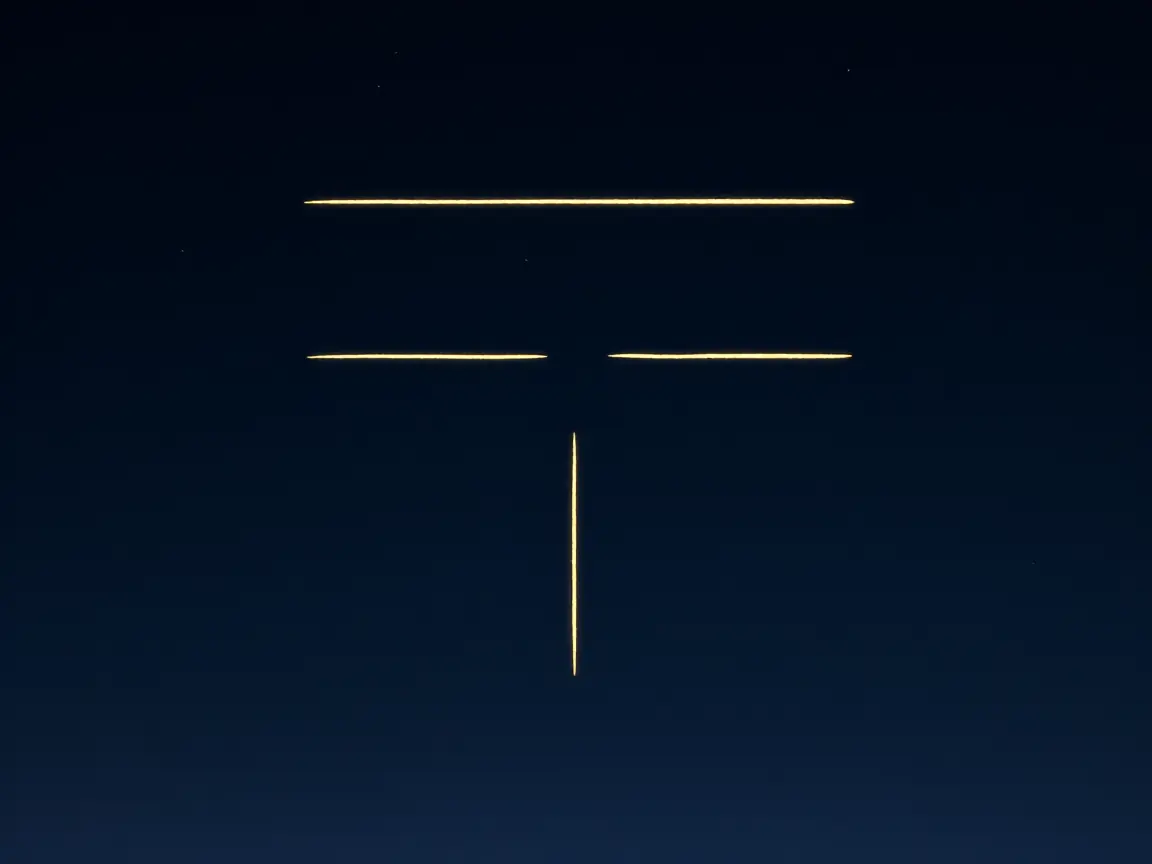
Halfway through the third volume of the Sanming Tonghui the manual stops counting branches and starts looking at handwriting. Wan Minying compiled the book in the Ming and it was first printed in 1578, and the material it draws on is a sixty-term cycle of ten stems crossed with twelve branches. A chapter headed 論干支諸字雜犯神煞, on the miscellaneous violations of the shapes of the stem and branch characters, runs for four pages with the elements barely mentioned. What is left is a list of characters with certain strokes in certain positions, and an outcome attached to each.
I came to that chapter expecting the weakest passage in the book. It is the most instructive one, for a reason its compiler would not have recognised.
Ping tou, po zi, xuan zhen, qu jiao and long ya are a set of BaZi markers defined by the written shape of the sexagenary characters rather than by their element, branch or combination. The Ming manual collects them in one chapter under 論干支諸字雜犯神煞 and gives every shape a fixed outcome. A flat top marks a monastic life. A broken stroke marks failing sight. A hanging vertical marks a soldier's tattooed face.
The argument the chapter makes first
Before it lists a single character, the chapter spends a paragraph defending the method. It is the only place in these three volumes where the manual argues for a reading instead of applying one.
古人製字各有取義. The ancients made characters with intent inside each one. Then the demonstration. 神 is glossed as 木自斃, wood dying on its own. Water and earth go extinct at 己, so 汜 means a dry ditch and 圯 means a collapsing bank. Fire weakens at 戌, so 烕, fire sitting under 戌, means to extinguish. Metal weakens at 丑, so 鈕, metal beside 丑, means a locked bolt. Metal plus 十 makes a needle, white plus 十 makes black, and water plus 十 makes juice.
The syllogism is tidy. One added stroke changes what a character says, and what it changes toward is always the element's own fate. So the drawing carries information the dictionary does not.
That argument interests me more than the list it introduces. It states the premise of every system of this kind out loud: form and meaning are not separate things, and a mark keeps something of the mind that made it. Nothing later in the book is that direct about what it is doing.
Five shapes and a halberd
Flat head, 平頭煞. 甲 丙 丁 壬 辰, the characters whose top is a horizontal bar. Three or four of them together with an empty branch on the board, and the person is a monk or a Daoist. The handbook the chapter quotes adds a social reading: an unbroken run of 甲乙丙丁 brings harm, with men hurting wives and women hurting husbands.
Broken character, 破字. 甲 癸 未 申 酉. 甲癸酉 costs the eyes. 未申 brings illness to the heart and the belly. The chapter tells you to check whether the hour falls into a harm position before committing to either.
Hanging needle, 懸針. 甲 辛 卯 午 申, characters with a vertical stroke hanging below the rest of the glyph. With no 徳 star in the chart, a soldier. The 三命纂局 goes further and says three or four 甲 or 辛 means eye trouble and danger, and with punishment stars attached, exile and a face tattooed at sentencing.
Bent foot, 曲脚煞 or 闕字. 乙 己 丑 巳, characters with a leg that does not land. Many of them and the body is incomplete, a cleft lip, a pierced ear. Li Jiuwan, quoted in the text, says that when 己酉丑 is complete and a 己 stem sits above, the teeth and lips are affected and the person is talked about for life. A 己巳 anywhere in the four pillars means you raise another person's child or were raised as one yourself.
Deaf and mute, 聾啞. 丙 壬 寅 酉. A 酉 day with a 戌 hour is enough on its own, and the chapter calls that a broken hour.
The halberd, 倒戈. 戊 庚 戌, shapes that lean. Add 羊刃 and the outcome is exile or a violent end.
Nine lines of verse
The verse closing the entry compresses the whole list.
平頭必是為僧道. Flat top, monk or Daoist. 破字終須失眼明. Broken character, sight lost in the end. 帶煞懸針須刺面. Hanging needle with a punishment star, a tattooed face. 徒流多是杖刑併. Exile usually arrives with the staff. 飢貧不幸逢空缺. Hunger and poverty meet the empty branch. 相貌兼知不十成. Read the face and know it is not whole. 惟是相遭聾啞子,空亡無氣定來精. Meet a deaf and mute child and the dead branch explains it. 若還曲脚多多帶,父子須敎兩姓生. Carry enough bent feet and father and son end with two surnames.
Nine lines, and every one of them a sentence somebody could read off a chart and hand to its owner.
Where the method changes without saying so
The last third of the chapter has quietly stopped being about shapes: 丙辛 must not meet 巳, and 丁壬 must not meet 午 or 申. That pairing is called 類應, a matching response, and it means a life that gutters before it burns. 乙辛 must not meet 未, 庚壬 must not meet 戌, called 反傷, counter-wound, and the result is wealth in the middle of life and an early death, or a punitive end for anyone born low.
Nothing in those lines concerns how a character is drawn. They are stems in forbidden pairs, a different method with a different logic, and the chapter turns the corner mid-sentence without marking it.
The silence is the part of the passage I would keep. Once you can see the join, you can find it in every system, including the polished parts of this one where it has been smoothed over.
What the shapes are a sign of
Jung drew a line between two words English treats as interchangeable. A sign stands for something known, as a word stands for its referent. A symbol stands for something unknown, something that cannot be made clear or precise.
The chapter starts with symbols. A top stroke is flat, a foot does not land, a vertical hangs like a needle. Those are resemblances, and a resemblance points at something you cannot state. Then the chapter does the thing Jung warned about and freezes each resemblance into a sign. The needle stops suggesting anything and means a tattooed face.
That is a category error, and I think it is one. What makes the passage worth reading is that the error sits in the open where you can watch it happen. The refined parts of the manual make the same move, hidden better. 用神 is a resemblance too, a judgement that one element in this chart resembles the thing this life needs, and by the time it reaches a modern reading the judgement has frozen into a sign with a number beside it.
What I do with it
I do not give the verdicts. I have never told anyone their eyes would fail because a 癸 sat beside an 甲. The shapes are still useful, and they split into two groups with different rules for me.
The first group names a life structure. Flat top with an empty branch is a monastic reading, and monastic does not have to mean a monastery. I ask whether they spent years inside an institution that wanted the whole of them, a service or a firm. Bent foot repeated many times is a reading about not belonging to your own name, and that one turns into a question about which family raised them.
Other shapes name a body. Eyes, teeth, ears. Those I leave alone. A person told their chart predicts bad eyes will report every headache they have ever had as evidence, and none of that is data.
There is a third use, and it only appears when a client brings a chart read by somebody else. The shape markers then tell me what that reader was looking at. If they were told they would end up a monk, I can find the run of 甲丙丁 in under a minute. The verdict stops being fate. It becomes a sentence somebody said, which is a thing a person can answer.
The line I keep
The verse ends on 相貌兼知不十成, from the face you also know it is not whole, and the line says plainly what this material becomes unchecked. A marking system that arrives at reading faces has stopped asking questions.
The first line of the chapter is the one I use. 古人製字各有取義. The people who built this believed a mark carries something of the mind that made it, and so do I, which is why I read charts at all. The difference is which marks I let it carry, and how long I let one resemblance stand before I ask the person in front of me what it means to them.
Curious what YOUR chart reveals?
Cast your free BaZi chart and see your Day Master, elemental balance and life patterns through a Jungian lens.
Get Your Free BaZi ChartFree · No sign-up needed
Frequently Asked Questions
What are ping tou and xuan zhen in BaZi?▼
Is it true that these markers predict blindness or a monastic life?▼
Why does a shape marker appear in one chart and not another?▼
How does this differ from the better known BaZi markers?▼
What should I do if a reading told me I carry one of these?▼
Recommended Reading
BaZi
Tian Xing Sha in BaZi: The Punishment Star and the Two Stems It Leaves Out
BaZi
Lei Ting Sha in BaZi: The Thunder Star That Either Strikes You or Hires You
BaZi
Guan Fu in BaZi: The Summons Star and the Five Offices of the Year
BaZi
Tian Huo Sha in BaZi: The Fire Star and the Editor Who Tested It on Himself